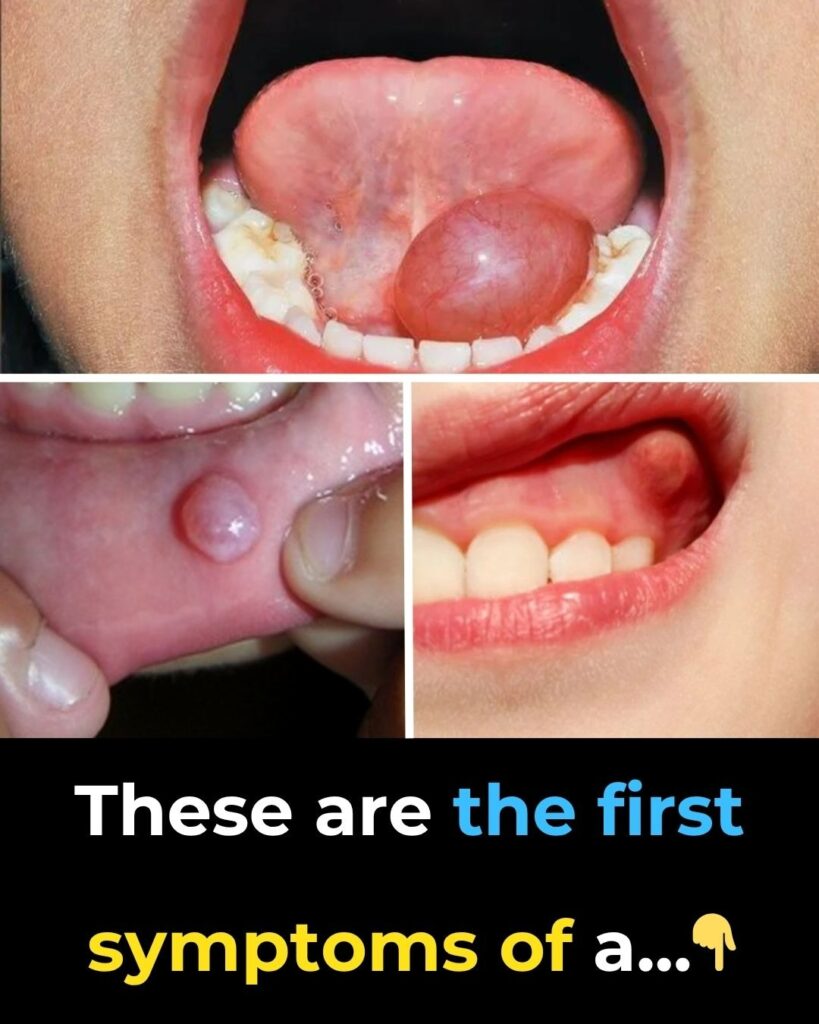
A mouth ulcer or open wound that persists
Often mistaken for a canker sore — but doesn’t go away
May bleed easily
One of the most common early signs.
2. Red or White Patches
Leukoplakia (white patches) – Thick, slightly raised
Erythroplakia (red, raw-looking patches) – More dangerous; often precancerous
Dentists check for these during routine exams.
3. Lumps or Thickening in the Mouth or Neck
A bump on the lip, gum, or side of the tongue
Swelling in the jaw or neck (could indicate lymph node involvement)
✅ Check monthly — know what’s normal for you.
4. Persistent Pain or Numbness
Ongoing mouth pain, even without visible injury
Numbness in the tongue, lips, or face
Feeling like something is stuck in your throat
Could signal nerve involvement.
5. Difficulty Chewing, Swallowing, or Speaking
Trouble moving the jaw or tongue
Sudden slurring or discomfort when eating
Feels like food “catches” unexpectedly
⚠️ Not typical with aging — investigate changes.
6. Loose Teeth Without Cause
Teeth become loose without gum disease or trauma
May be due to tumor growth affecting the jawbone
Especially concerning if only one tooth is affected.
7. Ear Pain or Persistent Sore Throat
Referred pain from tumors in the back of the mouth or throat
Often accompanied by swallowing difficulty
❗ In HPV-related cancers, ear pain may be an early clue.
8. Unexplained Bleeding
Blood in saliva or on your toothbrush
Not from brushing too hard or gum disease
Never ignore spontaneous bleeding in the mouth.
How Is Oral Cancer Detected?
During Routine Dental Visits:
Visual exam: Dentist checks lips, tongue, gums, and throat
Palpation: Feels for lumps or tissue changes
Advanced tools: Some offices use fluorescence or blue light screening
If anything suspicious is found, a biopsy confirms diagnosis.
This is why regular dental cleanings aren’t just about cavities — they’re life-saving screenings.
Stages of Oral Cancer
Staging helps doctors plan treatment and predict outcomes.
Stage
Description
✅ Stage I
Tumor ≤2 cm, no spread to lymph nodes
✅ Stage II
Tumor 2–4 cm, still localized
✅ Stage III
Tumor >4 cm OR spread to one nearby lymph node
✅ Stage IV
Spread to multiple nodes, other tissues, or distant organs
The earlier the stage, the better the prognosis.
️ Treatment Options (Based on Stage & Health)
Treatment
When Used
✅ Surgery
Remove tumor and possibly affected lymph nodes
✅ Radiation Therapy
Kill cancer cells; used alone or after surgery
✅ Chemotherapy
For advanced stages; often combined with radiation
✅ Targeted Drug Therapy
Drugs like cetuximab target specific cancer cell features
✅ Immunotherapy
Boosts immune system to fight cancer (e.g., pembrolizumab)
Treatment plans are personalized — based on location, stage, and overall health.
✅ Prevention Tips That Work
Habit
Benefit
✅ Quit tobacco
One of the strongest protective actions you can take
✅ Limit alcohol
No more than 1 drink/day (women), 2 (men)
✅ Get vaccinated against HPV
Recommended for boys and girls ages 9–26
✅ Eat more fruits & veggies
Antioxidants help protect cells
✅ Wear SPF lip balm
Prevents UV damage — yes, sunscreen applies here too
✅ Visit your dentist regularly
Oral cancer screenings are quick, painless, and potentially lifesaving
Many dentists perform an oral cancer check during every cleaning.
❌ Debunking the Myths
Myth
Truth
❌ “Only smokers get oral cancer”
False — HPV-positive cases are rising in non-smokers
❌ “If it doesn’t hurt, it’s fine”
Dangerous myth — early cancers are often painless
❌ “Mouthwash causes cancer”
No strong evidence — alcohol-based rinses may irritate but aren’t carcinogenic
❌ “Brushing harder prevents cancer”
False — brushing helps hygiene, but won’t stop cellular mutations
When to See a Doctor or Dentist
Seek professional care if:
Any symptom lasts more than 2 weeks
You notice a new lump, patch, or unexplained bleeding
You have trouble swallowing or speaking
You’re at high risk and haven’t had a screening
Early detection = better outcomes. Survival rates drop sharply when cancer spreads.
Final Thoughts
You don’t need to live in fear of your own mouth.
But you should pay attention to what’s happening inside it.
So next time you’re brushing your teeth…
look.
Check your tongue.
Peer under it.
Feel along your gums.
And if something looks wrong — even if it doesn’t hurt — speak up.
Because real health isn’t about waiting for pain. It’s about catching the quiet signs — before silence becomes tragedy.
And that kind of vigilance? It could save your life.


