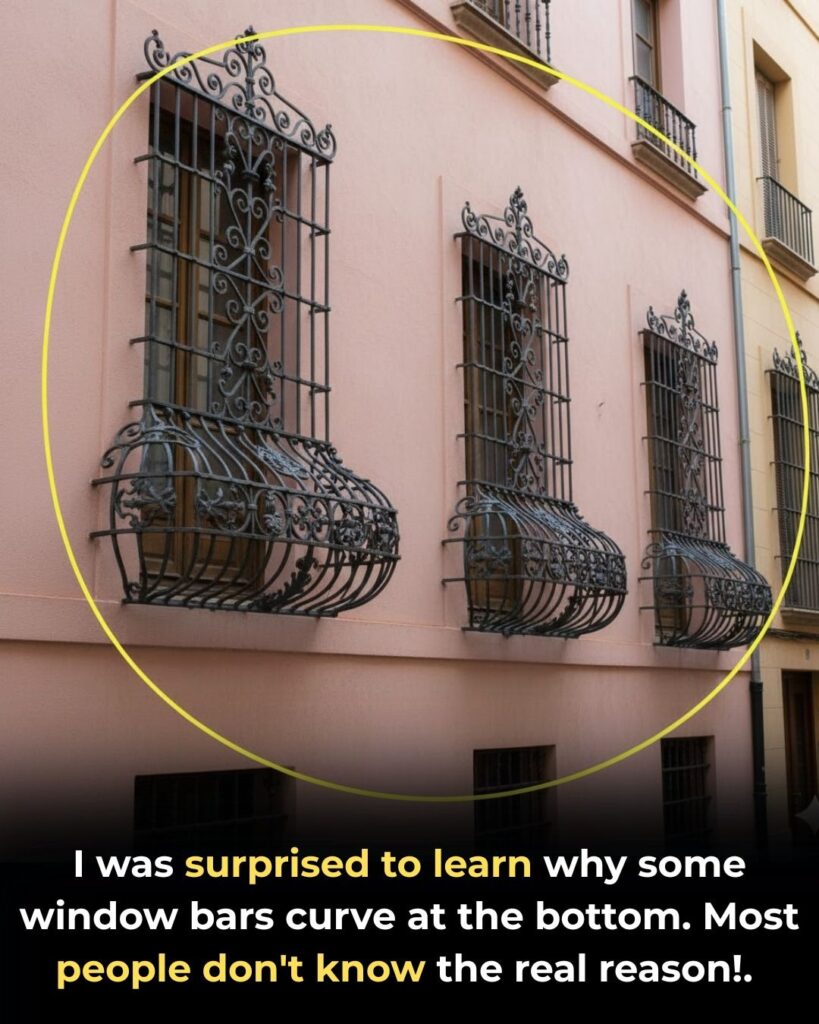
A straight horizontal bar can sag or flex under pressure — especially if made from thinner metal.
By curving the bar downward (forming a shallow “U” or “V” shape), it becomes more rigid and resistant to bending.
The curve adds tensile strength, making it harder to break or remove without tools.
Think of it like a potato chip:
A flat piece of metal bends easily — but add a curve, and suddenly it resists pressure much better.
✅ This makes the entire guard system stronger — without using heavier, more expensive materials.
🚪 Preventing Water Pooling & Improving Drainage
In outdoor installations (like ground-floor windows), window guards face constant exposure to rain.
A flat bottom bar can collect water in the middle, leading to:
Rust and corrosion over time
Weakening of the metal
Potential staining on walls or windowsills
By curving the bar downward:
Water runs off to the sides instead of pooling
Longevity of the metal increases
Maintenance needs decrease
💧 Especially important in rainy climates or coastal areas with salty air.
🧹 Easier Cleaning & Less Debris Buildup
Flat bars tend to collect dust, leaves, bird droppings, and dirt — especially when horizontal.
A curved design:
Reduces surface area where debris can settle
Makes it harder for pests to build nests
Allows wind and rain to naturally wash away grime
This keeps the appearance cleaner and reduces maintenance — a small detail that makes a big difference over time.
🎨 Aesthetic Appeal: Softening a Harsh Look
Security bars can feel intimidating or prison-like — especially on homes.
The gentle curve helps:
Break up rigid lines
Create a more inviting, less industrial appearance
Blend better with traditional or decorative architecture
Some manufacturers even enhance this with ornamental scrollwork or powder-coated finishes — turning protection into art.
🏡 In historic neighborhoods, curved bars often comply with local codes that limit the visual impact of security upgrades.
⚠️ Safety Considerations (Especially for Bedrooms)
While security is key, fire safety matters too.
In many places, building codes require that bedroom window bars include:
A quick-release mechanism
Or one panel that opens fully (like a door)
This ensures occupants can escape during emergencies like fires.
💡 The curve itself doesn’t affect egress — but it’s often part of a well-designed system that balances security, durability, and safety.
❌ Debunking the Myths
Myth
Truth
❌ “The curve is just for style”
No — while it improves looks, the main reasons are structural and functional
❌ “Curved bars are weaker because they’re bent”
False — proper bending strengthens metal through work hardening
❌ “All window bars should be straight”
Not true — curves offer real performance benefits
❌ “Only cheap bars sag and need curving”
Incorrect — the curve is intentional, not a fix for poor quality
Final Thoughts
You don’t need flashy features to appreciate good design.
But you do deserve to notice the quiet details — like why a simple curve makes a metal bar stronger, safer, and longer-lasting.
So next time you’re walking down the street…
pause.
Look at the window guards.
Notice their shape.
Appreciate the science behind the arc.
Because real innovation isn’t always loud.
It’s quiet.
And sometimes,
it’s written in steel — bending strength into beauty.
And that kind of engineering?
It protects more than glass.
It protects peace of mind.


