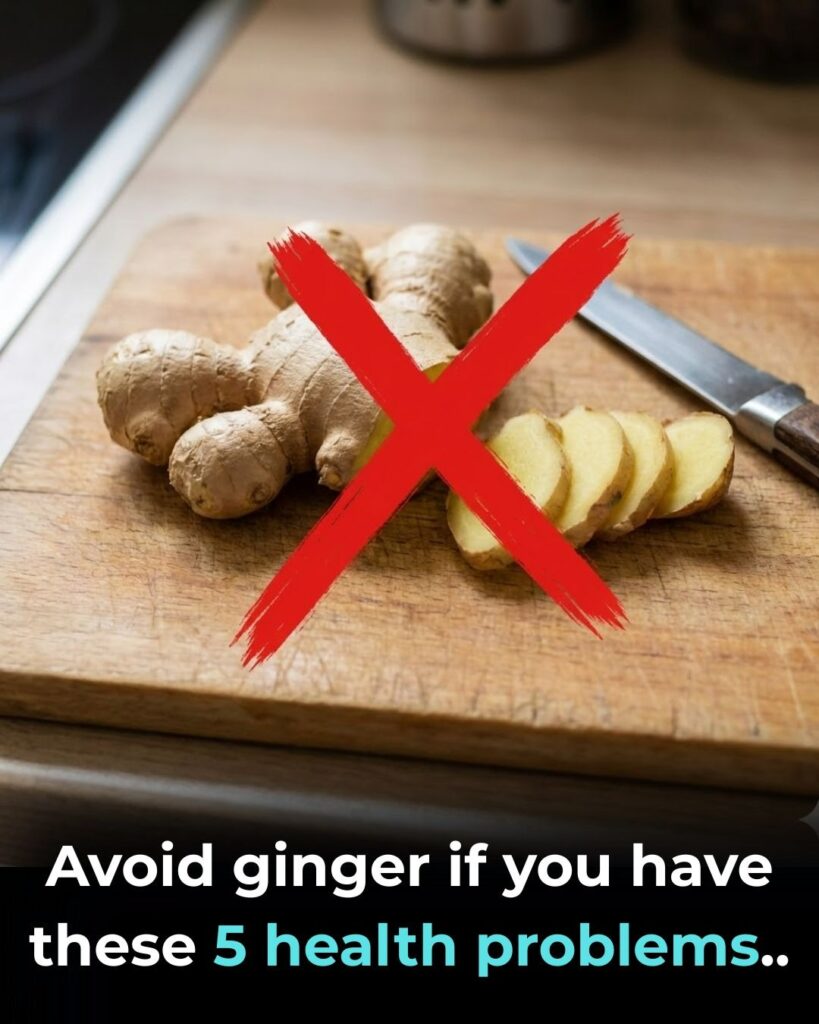
Ginger is rightly celebrated as a superfood—its anti-inflammatory, digestive, and immune-boosting powers are well-documented. However, like any potent natural compound, it’s not right for everyone in every situation. The common advice to “avoid ginger if you have these 5 health problems” often circulates online, but the reality is more nuanced than a simple “never eat.” For most people, culinary amounts are safe, but therapeutic doses (supplements, concentrated extracts, or large quantities of fresh ginger) require caution or avoidance for certain individuals.
Here are five health conditions where you should speak with your doctor before intentionally consuming medicinal amounts of ginger.Buy vitamins and supplements
1. Blood Clotting Disorders or Upcoming Surgery
Why the Concern: Ginger, especially in concentrated forms, has natural antiplatelet (blood-thinning) properties. This is part of what makes it beneficial for circulation.
The Risk: For individuals with bleeding disorders (like hemophilia) or those taking anticoagulant medications (like warfarin, clopidogrel, or even daily aspirin), adding a significant amount of ginger could potentially increase the risk of bruising and bleeding.
Practical Advice: If you have such a condition or a major surgery scheduled, discuss all supplements and concentrated ginger intake with your doctor. Small amounts in cooking are typically fine, but do not take ginger supplements without medical guidance.
2. Active Gallbladder Disease
Why the Concern: Ginger is known to stimulate bile production from the liver. Bile is stored in the gallbladder.
The Risk: If you have an active gallbladder obstruction, gallstones, or a history of bile duct issues, this increased bile flow could potentially trigger a painful gallbladder attack or worsen symptoms.
Practical Advice: If your gallbladder has been removed or is healthy, ginger is usually not a problem. If you have known gallbladder disease, especially with active stones, consult your doctor before using ginger as a remedy.Medical resources
3. Certain Heart Rhythm or Blood Pressure Issues
Why the Concern: Some studies suggest high doses of ginger may interact with calcium channels and affect heart rate and blood pressure.
The Risk: For individuals with uncontrolled hypertension or those on specific blood pressure or heart rhythm medications (like calcium channel blockers, such as nifedipine or verapamil), concentrated ginger could potentially interfere with medication efficacy, causing blood pressure to drop too low or affecting heart rhythm.
Practical Advice: If your heart condition is well-managed and you’re on a stable medication regimen, small culinary amounts are generally safe. However, avoid self-prescribing high-dose ginger supplements and inform your cardiologist of any supplements you take.
4. GERD, Ulcers, or Inflammatory Bowel Disease (IBD) Flares
Why the Concern: While ginger can soothe mild nausea and indigestion for many, its pungent compounds can be irritating to a sensitive or already inflamed digestive lining.
The Risk: During an active flare of gastritis, peptic ulcers, or IBD (like Crohn’s or ulcerative colitis), ginger may cause a burning sensation, heartburn, or worsen abdominal pain. Its stimulating effect on digestion can be too much for a troubled gut.
Practical Advice: If you have a sensitive stomach, introduce ginger in tiny amounts. During an active ulcer or IBD flare, it’s often best to avoid it until the inflammation calms down. Listen to your body.Crohn’s disease guide
5. Late Pregnancy
Why the Concern: This is a specific and important timing issue. Ginger is a well-known and effective remedy for morning sickness in early pregnancy and is generally considered safe in food amounts.
The Risk: Some medical sources advise caution with high-dose supplements (over 1 gram per day) in the third trimester (late pregnancy) due to theoretical concerns about its blood-thinning effect potentially affecting labor and delivery.
Practical Advice: Using fresh ginger in teas or meals for nausea is widely accepted. However, pregnant individuals should never use concentrated ginger supplements or high doses without explicit approval from their obstetrician or midwife, especially as the due date approaches.
The Golden Rule: Moderation & Medical Advice
For the vast majority, enjoying ginger in food and tea is safe and beneficial. The risks primarily arise with:Pregnancy health tips
High-dose supplements (capsules, extracts, powders).
Pre-existing, specific health conditions.
Combination with certain medications.
Always inform your healthcare provider about all supplements and herbal remedies you are using. They can help you navigate potential interactions based on your unique health profile.


