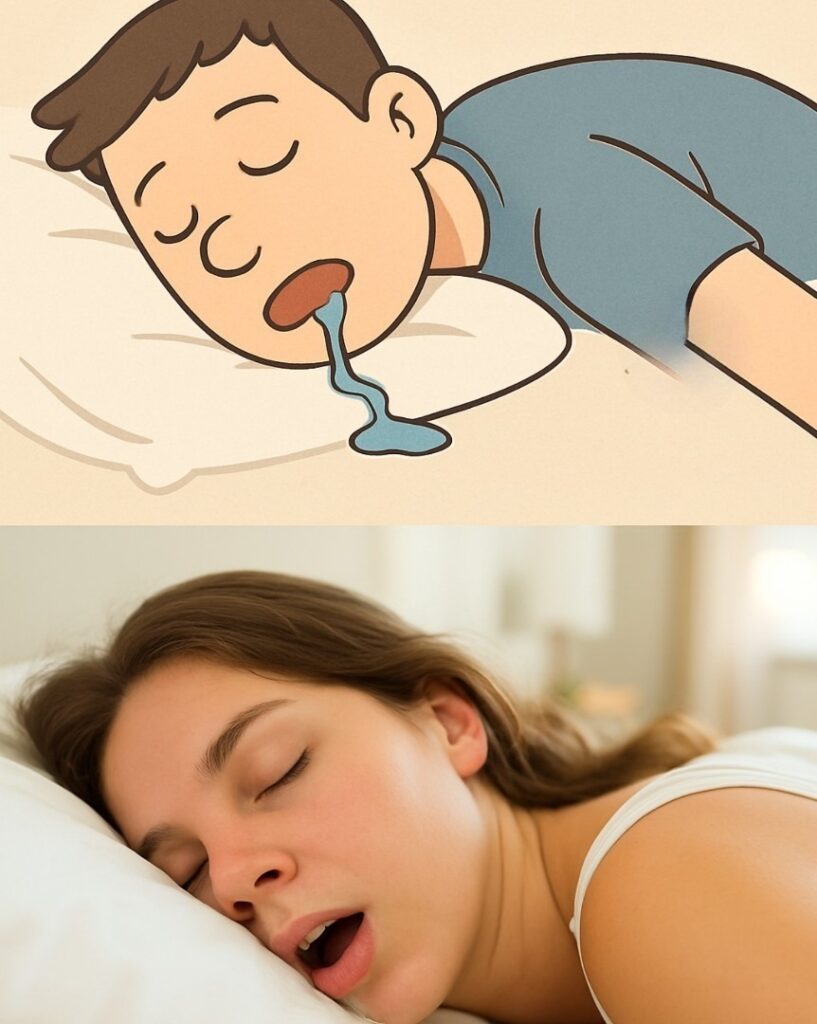
You wake to the familiar sensation—a damp patch on the pillow, a faint trail at the corner of your mouth. For a split second, there’s that familiar flicker of self-consciousness. Did I drool again?
Here’s the truth your pillow already knows: That moisture is a quiet victory. It’s not a flaw. It’s not weird. It’s your body’s way of whispering, “You slept deeply. You relaxed completely. You did exactly what you needed to do.”
Let’s decode what your brain is really saying when you drool—and why this humble nighttime habit is often a sign of thriving sleep, not failing etiquette.
The Science of Surrender: Why Drooling Happens
During deep sleep—especially in the dream-rich REM stage—your brain initiates a protective state called atonia. This temporary muscle paralysis prevents you from physically acting out your dreams (imagine sleep-walking through a nightmare!). It’s your brain’s elegant safety mechanism.
But here’s the gentle side effect: as your jaw, tongue, and throat muscles relax into this protective stillness:
→ Your mouth may part slightly
→ Your swallowing reflex slows to a gentle rhythm
→ Saliva that would normally be swallowed pools and finds its escape
The result? Drool. And far from being a problem, it’s often evidence of deep, uninterrupted sleep—the kind that restores memory, processes emotion, and rebuilds your body.
What Your Brain Is Whispering (In Its Own Silent Language)
While your sleeping brain isn’t forming sentences, its physiology speaks volumes:
“You’re in the healing zone.”
Drooling peaks during REM sleep—the stage where your brain consolidates memories, processes emotions, and repairs neural pathways. If you’re drooling, you’re likely cycling through the very stages that make sleep restorative.
“Your body trusts this moment.”
Tension keeps your jaw clenched shut. Drooling means your muscles have truly let go—often a sign you’re free from the anxiety or stress that keeps so many of us rigid even in rest.
“I’m protecting your airway.”
Saliva isn’t just moisture—it’s a frontline defender. It lubricates your throat, traps dust and irritants, and maintains a healthy environment for breathing. If you’re congested and mouth-breathing, that extra drool? It’s your body’s way of keeping your airway moist and clean.
When to Listen Closely: Rare Exceptions
For most people, sleep drooling is completely harmless. But your body sometimes uses drooling as a signal worth noticing:
⚠️ Sudden changes – If drooling is new, excessive, or dramatically different from your normal pattern
⚠️ One-sided drooling – Could indicate nerve or muscle issues requiring evaluation
⚠️ Accompanied by other symptoms – Choking, gasping, loud snoring, or daytime fatigue could signal sleep apnea
⚠️ Medication side effects – Some drugs (antipsychotics, muscle relaxants) increase saliva production
⚠️ Persistent congestion – Chronic mouth-breathing from allergies or structural issues can increase drooling
When to consult a professional: If drooling is accompanied by swallowing difficulties, facial weakness, or disrupts your sleep quality—seek medical guidance. Otherwise, it’s likely just your body doing its job beautifully.
Gentle Adjustments (If You Choose)
There’s no medical need to stop normal sleep drooling—but if it causes discomfort or embarrassment, consider these subtle shifts:
🌙 Shift your position – Sleeping on your back keeps saliva contained; side/stomach sleeping encourages escape
🌙 Clear your pathways – Treat nasal congestion with saline rinses, humidifiers, or allergy management
🌙 Hydrate wisely – Drinking enough water during the day prevents thick, sticky saliva that pools more noticeably
🌙 Choose your fabrics – Satin or silk pillowcases feel cooler and show less dampness than cotton
🌙 Elevate gently – A slightly raised head (extra pillow or wedge) can discourage pooling without disrupting sleep
The Real Takeaway: Honor Your Rest
Drooling isn’t a sign of sloppiness—it’s a badge of deep, unguarded rest. It means your muscles released their tension. Your brain cycled through healing stages. Your body prioritized restoration over performance.
So tomorrow morning, when you notice that familiar dampness—don’t sigh. Smile.
Your brain isn’t saying “Oops.”
It’s saying “You let go. You trusted the night. You healed.”
And in a world that rarely allows us to surrender completely? That’s not embarrassing.
It’s beautiful.
P.S. If someone teases you about drooling? Hand them this article. Then tell them: “My brain was busy healing while yours was judging. Who’s winning?”


