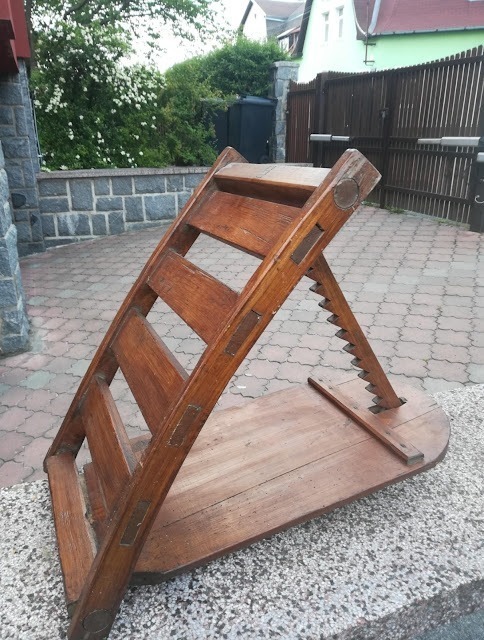
You’ve discovered more than an antique—you’ve found a testament to a quieter way of living. This weathered wooden cheese press, with its smooth-worn surfaces and purposeful design, carries the weight of generations who understood that the finest things in life cannot be rushed.
What It Is: A Tool of Transformation
This is a traditional wooden cheese press—a cornerstone of farmhouse kitchens from the 18th through early 20th centuries. Crafted from dense hardwoods like maple, oak, or beech, its sole purpose was alchemy: transforming fresh milk curds into wheels of aged cheese through the gentle, persistent force of time and pressure.
How it worked:
Fresh curds were wrapped in cheesecloth and placed inside a cylindrical mold. The press’s screw or lever mechanism then applied steady, adjustable pressure over hours—sometimes days—slowly coaxing out whey while binding the curds into a dense, sliceable form.
Why wood?
Hardwood offered three gifts: natural antimicrobial properties, durability against constant moisture, and subtle breathability through its grain—essential for the aging process.
More Than Function: A Philosophy in Wood
This press embodies a worldview nearly lost to modern convenience:
→ Self-reliance: Families transformed raw milk into nourishment without store shelves or supply chains
→ Seasonal wisdom: Cheese-making followed nature’s rhythm—spring calving, summer grazing, winter preservation
→ The dignity of patience: Unlike today’s instant gratification, cheese demanded presence, timing, and care
“It was a slow build… hour by hour, until the perfect texture was achieved.”
This isn’t merely about dairy. It’s a metaphor for living intentionally—where value grows through attention, not acceleration.
How to Recognize a True Cheese Press
How to Recognize a True Cheese Press
Look for these distinctive features:
✓ Drainage groove or hole in the base (for whey to escape)
✓ Removable mold or hoop (where curds were packed)
✓ Screw, lever, or weighted arm (for applying pressure)
✓ Smooth, functional surfaces (worn from use, not decorative carving)
If your artifact bears these marks, you hold a genuine heirloom—a tool that fed families and preserved abundance through lean seasons.
Honoring Its Legacy Today
Preserve it:
Clean gently with a vinegar-water solution; never soak. Apply food-safe mineral oil to prevent cracking and honor its material integrity.
Display it:
Let it rest on your kitchen counter or hang in your pantry—a daily reminder of craftsmanship and connection.
Use it:
Many modern artisans still press small-batch cheeses with vintage tools. Try your hand at paneer, feta, or farmhouse cheddar.
Share its story:
Tell younger generations about the hands that shaped this wood, the meals it helped create, the resilience it represents.
A Quiet Rebellion in Modern Times
In an era of ultra-processed foods and disposable culture, this wooden press stands as gentle resistance. It whispers that nourishment isn’t manufactured—it’s made. That the most sustaining things require time, care, and human touch.
So dust it off. Let it sit where you’ll see it daily. And let it ask you the question it has carried for centuries:
“What will you create with your own hands today?”
For the past is never truly behind us.
It lives in objects like this—
waiting to teach us how to move forward
with patience, purpose, and grace.