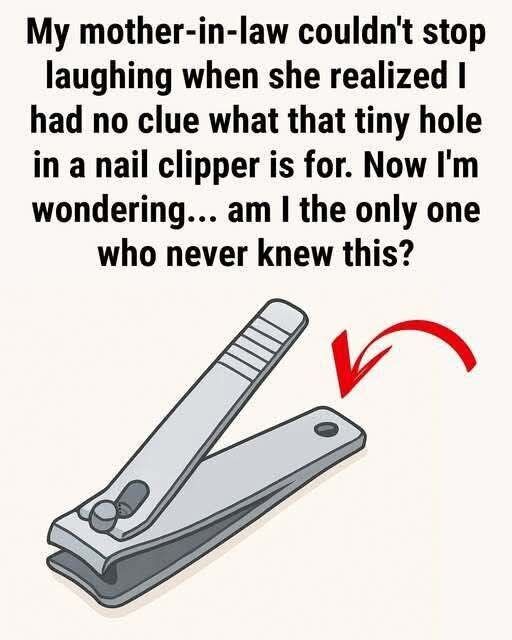
Most of us reach for a nail clipper without giving it a second thought. It sits quietly in a bathroom drawer, a travel kit, or a bedside table, ready when needed. Yet tucked into its familiar metal shape is a tiny detail many people notice but rarely question. That small round hole near the lever looks simple, almost decorative. In reality, it reflects thoughtful nail clipper design that has stood the test of time.
For older adults especially, everyday tools often tell quiet stories. They remind us of an era when items were built to last, designed with purpose rather than flash. The hole in a nail clipper is one of those understated features. It solves practical problems, improves usability, and connects modern grooming tools to a long history of personal care.
Understanding why that hole exists offers more than trivia. It gives insight into how small design choices can make daily routines easier, more organized, and more dependable.
A Simple Solution to a Common Problem
One of the most practical reasons for the hole in a nail clipper is portability. Nail clippers are small, smooth, and easy to misplace. Many people have owned more than one simply because the previous one disappeared into a drawer or vanished during travel.
The hole provides a secure attachment point. A simple ring, string, or hook allows the clipper to be fastened to a keychain, grooming kit, or hanging organizer. This keeps it visible and accessible when needed.
For people who value order, especially those downsizing or simplifying their homes, this feature is surprisingly helpful. Instead of searching through multiple drawers, the clipper stays right where it belongs. It is a small design detail that supports calm, organized living.
Making Nail Care Easier on the Hands
As we age, grip strength and finger flexibility can change. Tasks that once felt effortless may require a bit more care. The hole in a nail clipper can quietly assist with this.
Some users thread a small loop through the hole to create a better grip. Others use it as a leverage point, allowing more control when pressing the lever. This can make trimming nails more comfortable and less stressful on the hands.
This aspect of nail clipper design is rarely advertised, yet it reflects thoughtful consideration for a wide range of users. A tool that adapts to different needs remains useful across decades of life.
Keeping Tools Together and Organized
Many households keep separate clippers for fingernails and toenails. Over time, these tools can become mixed up or misplaced. The hole offers a simple way to keep pairs together using a small ring or tie.
For couples or families, this can reduce confusion and save time. For individuals who value clear routines, it supports consistency. Good design often works quietly in the background, and this feature does exactly that.
It also makes packing for travel easier. A clipper attached to a toiletry bag or pouch is less likely to be forgotten or lost.
A Design Rooted in History
The small hole in a nail clipper is not a modern invention. Its origins reach back to the late 1800s, a time when personal grooming tools were becoming more widely available.
In that era, nail clippers were considered refined accessories. They were often carried by both men and women, much like pocket watches or small combs. The hole allowed the clipper to be attached to a chain or decorative holder, ensuring it was always close at hand.
These early grooming tools were built with durability and daily use in mind. The hole was not added for decoration. It was a practical solution for people who valued preparedness and personal presentation.
Why the Hole Never Disappeared
Over the years, nail clippers have evolved. Some now include built-in files, catchers for nail trimmings, or even multi-purpose features. Manufacturing methods have changed, and materials have improved.
Yet the small hole has remained. That consistency speaks volumes. In product design, features that serve no purpose are often removed over time. The fact that this one remains shows it continues to offer value.
Manufacturers recognize that users appreciate tools that feel familiar and reliable. The hole represents a design philosophy that favors long-term usefulness over fleeting trends.
Everyday Tools That Reflect Thoughtful Living
For many older adults, there is comfort in tools that simply work. There is satisfaction in objects that do not need constant replacement or explanation. The nail clipper is a perfect example of this mindset.
Its small hole reminds us that good design does not need to be complicated. It needs to understand real life. It needs to anticipate small frustrations and quietly remove them.
When you notice this detail, you may begin to see similar thoughtfulness in other everyday items. Hooks, loops, and simple attachments often exist for reasons rooted in real human experience.
A Quiet Lesson in Paying Attention
In a fast-moving world filled with digital distractions, small physical details can ground us. Taking a moment to notice something as ordinary as a nail clipper encourages mindfulness.
That small hole invites us to slow down and appreciate how even simple objects are shaped by history, practicality, and care. It reminds us that usefulness often hides in plain sight.
For those who grew up repairing and maintaining belongings rather than replacing them, this detail may feel especially meaningful. It reflects a time when items were expected to serve faithfully for years.
The Next Time You Trim Your Nails
The next time you reach for your nail clipper, pause for a moment. Notice its weight, its balance, and that small round hole near the lever. Consider how many hands have relied on the same design over generations.
This tiny feature connects past and present. It supports organization, comfort, and reliability. It proves that even the smallest design choices can improve daily life in quiet but lasting ways.
In the end, the hole is not just a hole. It is a reminder that thoughtful design endures, and that everyday tools still deserve our appreciation.