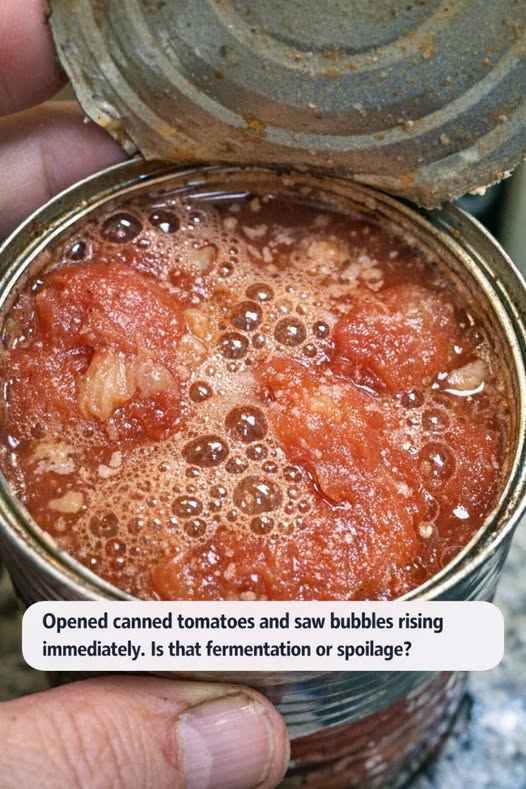
You open a can of tomatoes expecting a simple cooking shortcut, but instead you’re greeted by a strange sight: bubbles rising to the surface as soon as the lid comes off, almost like the contents are gently fizzing. It’s an unsettling moment that raises an immediate question in any careful cook’s mind: is this natural fermentation, or is something wrong?
Commercially canned foods are heat-processed to kill bacteria, yeasts, and molds, then sealed so tightly that nothing living should remain inside. Under normal conditions, the contents of a sealed can are essentially sterile and stable. That means fresh bubbling right after opening is not something you should usually see.
When bubbles appear immediately without stirring or shaking, it often points to gas that built up inside the can before it was opened. Gas formation in canned food is typically a sign that microorganisms have been active, breaking down sugars and producing carbon dioxide or other gases as byproducts. In other words, the food has likely started to spoil.
True, tomatoes are acidic, and that acidity makes dangerous bacterial growth less common than in low-acid foods. However, spoilage can still occur if the can was damaged, improperly stored, or if the seal was compromised in some way. Even a microscopic leak can allow contaminants to enter over time.
One key difference between controlled fermentation and spoilage is intention and environment. Fermentation happens in carefully managed conditions using specific microbes. A sealed metal can sitting on a pantry shelf is not a fermentation vessel. If fermentation-like activity is happening there, it’s unplanned and unsafe.
There are a few warning signs that canned food should be discarded immediately:
Bubbling,,…..
Please Head On keep on Reading (>)