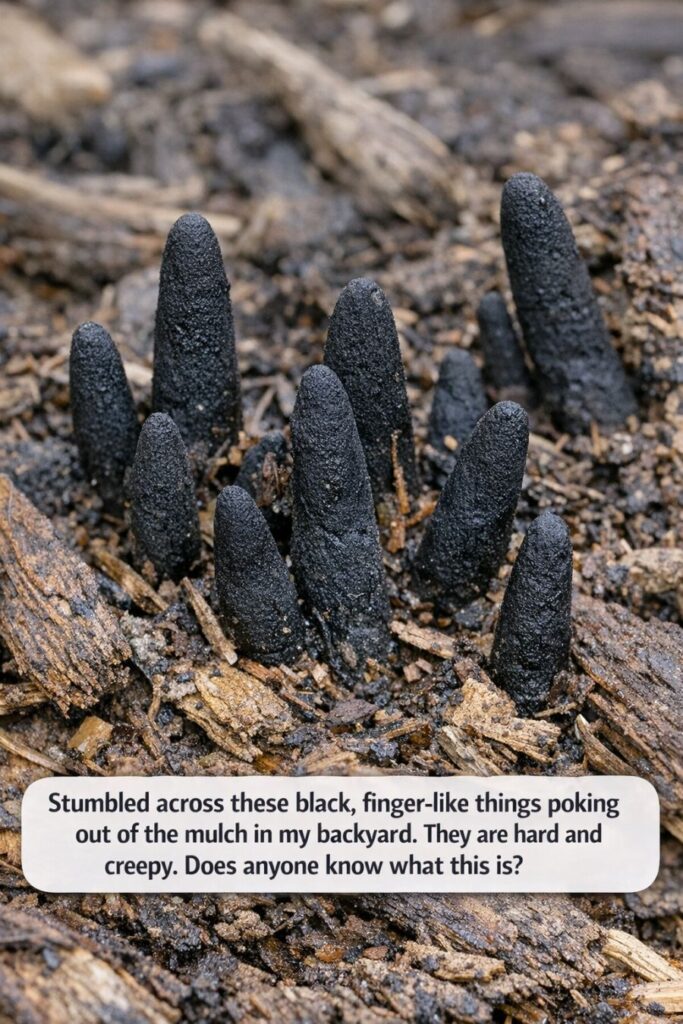
It is quite common to feel a mix of curiosity and a little bit of a chill when you find something unexpected in your garden. Nature has a way of surprising us, especially when strange, dark shapes begin to poke through your flower beds. If you have recently seen what looks like charred, skeletal fingers rising from your wood chips, you aren’t alone.
This phenomenon often leads to many questions about safety and what exactly is happening beneath the soil. While the sight might be startling, the reality is a fascinating example of how nature recycles itself.
1. Why These Dark Protrusions Look So Eerie
At first glance, seeing ‘black, finger-like growths’ appearing in your mulch can be a bit of a shock. These fungi are usually dark brown or deep black and grow in an elongated shape, typically reaching about 3 to 4 inches tall. Because they look so much like ‘skeletal fingers reaching out from the earth,’ they have earned a very spooky reputation.
When they are young, they might look pale or even slightly blue, but as they age, they become hard and woody. This transition into a rigid, blackened form is what really solidifies their ‘macabre reputation.’ Their dark color makes them stand out sharply against the lighter brown of garden mulch, making them very easy to spot.
2. Getting to Know the Fungus in Your Garden
The scientific name for this organism is Xylaria polymorpha, but most people know it simply as ‘Dead Man’s Fingers.’ It is what scientists call a saprobic fungus. This means its primary job is to eat and break down dead organic matter. You will most often find it in forests, but it frequently hitches a ride into backyards through bags of wood chips or natural decomposing wood.
As a member of the Xylariaceae family, this fungus is a vital part of the ecosystem. It specializes in breaking down the tough parts of wood, like cellulose and lignin. By doing this, it helps turn old wood back into rich nutrients for the soil. Usually, the ‘fruiting bodies often emerge in clusters,’ which creates the illusion of a hand buried just beneath the surface.
3. How to Identify This Fungus Correctly
If you want to be sure of what you are looking at, check for these specific traits:
Shape: Long, upright, and finger-like.
Color: They start out light or white but turn black or dark brown as they mature.
Texture: The outside is rough and tough, but if you were to cut one open, the ‘interior is white when cut open.’
Location: Look near the base of old tree stumps, buried logs, or areas with very thick, old mulch.
4. What Makes Them Grow in Your Yard?
Fungi like this don’t appear by magic; they need the right “food” and environment. They ‘thrive in environments rich in decomposing wood,’ which makes garden mulch a perfect home. If your garden beds stay damp and are tucked away in the shade, you have created the ‘optimal conditions for fungal development.’ You will likely see them pop up most often during the spring or fall when the weather is mild and moist.
5. Safety for Your Family and Pets
The most important question for many is: “Is it dangerous?” The good news is that ‘Dead Man’s Fingers is not harmful to humans, pets, or plants.’ Even though they look like something out of a horror movie, they won’t hurt you if you touch them or stand near them.
From a gardening perspective, they are actually quite helpful. They don’t attack living plants; they only focus on the dead wood. While they aren’t toxic to touch, they are ‘not considered edible’ because they are incredibly tough and would likely taste terrible.
6. Common Mix-ups and Misidentifications
Because they look so strange, people often confuse them with other things. For instance, they are ‘commonly mistaken for Stinkhorn fungi.’ While Stinkhorns are also long and weird-looking, they usually have a much softer texture and a very strong, unpleasant smell that attracts flies. Sometimes, people also mistake them for simple ‘decaying plant material or roots’ that have turned black over time.
7. What Should You Do if You Find Them?
Honestly, the best thing to do is nothing at all! Because they are ‘breaking down organic matter and enriching the soil,’ they are technically doing your garden a favor. However, if the look of them bothers you, it is perfectly fine to remove them. Just keep in mind that as long as the decaying wood remains underground, they might eventually grow back.
8. Tips for Safe Removal
If you decide you want them gone, here is the best way to handle it:
Wear a pair of gardening gloves just to keep your hands clean.
Gently pull the “fingers” out, trying to get the ‘underlying decaying wood’ they are attached to.
Put them in your ‘compost bin or yard waste container.’
Avoid tossing them into the woods if you don’t want them to start growing there too.
9. Can You Stop Them From Returning?
To prevent a comeback, you need to change their environment. You can do this by ‘regularly turning and refreshing mulch’ to let in more air and light. Improving the drainage in that area so it doesn’t stay soggy will also help. If you really want to discourage them, you might switch to a different type of ground cover, like ‘pine needles or gravel,’ which doesn’t provide the same type of food the fungus needs.
10. When to Consult a Professional
If you are ever unsure about a fungus and worry it might be something toxic, it is a great idea to ‘consult with a mycologist or a local extension service.’ This is especially true if you notice a ‘widespread fungal issue’ that seems to be making your living trees or shrubs look sickly, as that might be a sign of a different, more aggressive type of fungus.
11. Finding Beauty in the Unusual
While they might be creepy, finding ‘Dead Man’s Fingers’ is a great way to start learning about mycology. These fungi are essential workers in the natural world, and seeing them is a sign that your soil is active and healthy. ‘Embracing a sense of curiosity’ about these strange growths can turn a backyard fright into a fun nature lesson.