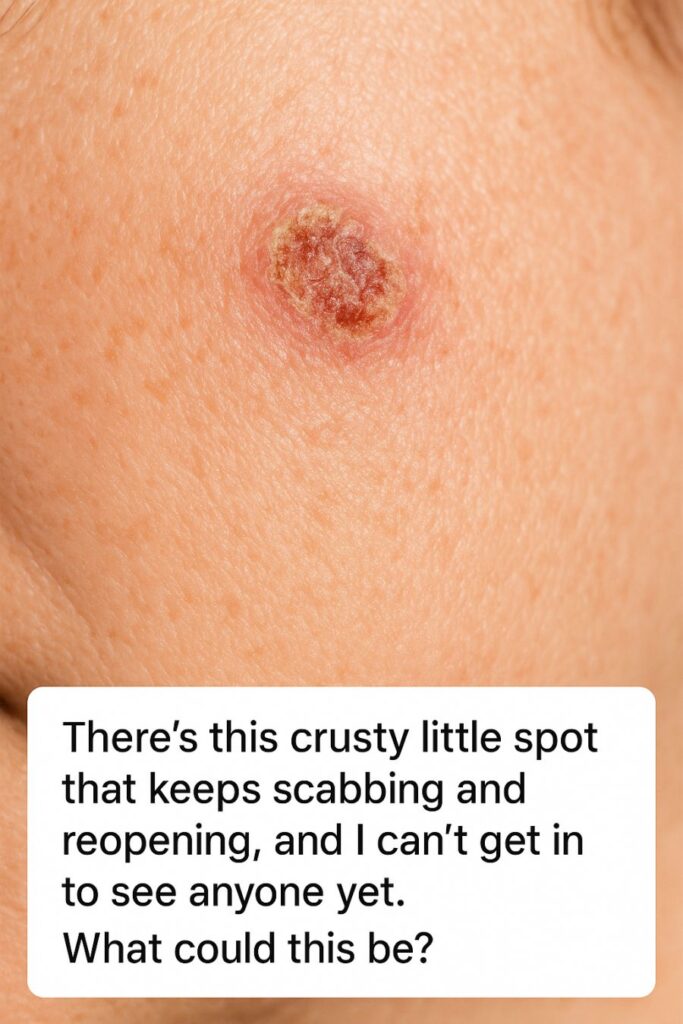
3. Squamous Cell Carcinoma (SCC)
SCC may present as:
A thick, crusted or scaly lesion
A sore that reopens repeatedly
A red, irritated patch that may be tender
This type can grow more aggressively than basal cell carcinoma and needs prompt evaluation.
4. Chronic Wound or Infected Lesion
Sometimes repeated scabbing is due to:
Bacterial infection
Constant picking or scratching
Poor circulation or delayed healing
These wounds may look inflamed and resist healing despite basic care.
Why You Shouldn’t Ignore It
A spot that does not heal within 2–3 weeks is considered a warning sign in dermatology. Even if it’s painless, its persistence matters. Early evaluation often means simpler treatment, smaller procedures, and better outcomes.
Ignoring it or covering it repeatedly with bandages or creams can delay proper care.
What You Can Do While Waiting to Be Seen
If you can’t get in to see a healthcare provider right away:
Do not pick or scratch the area
Keep it clean and dry
Avoid harsh products or home remedies
Protect it from sun exposure
Take note of changes (size, color, bleeding, pain)
If the lesion grows rapidly, bleeds frequently, becomes painful, or shows signs of infection (pus, warmth, spreading redness), seek urgent medical care.
The Bottom Line
A crusty spot that keeps scabbing and reopening is not something to brush off, especially if it’s been there for weeks or months. While it could be a benign or sun-related condition, it may also be an early sign of skin cancer—something that is often very treatable when caught early.
Your skin is visible for a reason. When it keeps sending the same signal over and over, it’s worth listening.
This article is for informational purposes only and is not a medical diagnosis. Always consult a qualified healthcare professional for evaluation and treatment.