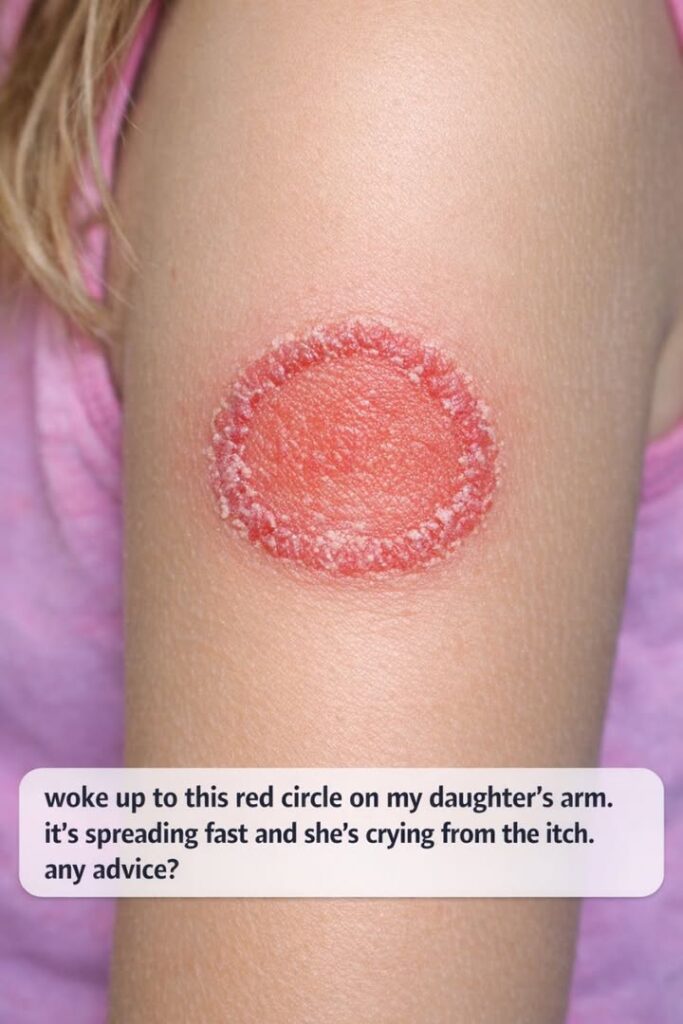
Waking up to find an unusual rash on your child’s skin can be a cause for concern, especially when it’s accompanied by discomfort and distress. A red, spreading circle on the skin could indicate several conditions, and understanding what you’re dealing with is crucial for providing the right care.
The sight of your daughter’s tears and her constant scratching is enough to make any parent anxious. While it’s important not to panic, taking prompt action is key. In this article, we’ll explore possible causes for the rash, immediate steps to take, and when it might be necessary to consult a healthcare professional.
1. Why A Red, Spreading Circle Could Be Ringworm (And Not An Actual Worm)
Despite its name, ringworm isn’t caused by a worm but by a fungal infection known as tinea. This condition manifests as a red, circular rash with a clear or scaly center, which can range from a few millimeters to several centimeters in diameter. As it spreads, the edges may appear raised and distinct, giving it a ring-like appearance.
Ringworm is common among children due to their close contact with peers and shared surfaces. It thrives in warm, moist environments and can be easily contracted from infected individuals, animals, or contaminated objects.
2. First Things To Do The Moment You Notice The Rash
The first step upon noticing a rash is to clean the affected area with mild soap and lukewarm water. This helps remove any dirt or irritants that could exacerbate the rash. Pat the area dry with a clean towel, avoiding vigorous rubbing which can irritate the skin further.
Ensure your child’s nails are trimmed to prevent scratching, which can lead to infection. Apply a cool compress to alleviate itching, and if possible, keep the area uncovered to allow it to breathe.
3. Key Signs It’s Ringworm Versus Lyme Disease, Hives, Or Eczema
Ringworm typically presents as a singular or multiple circular lesions with clear, defined edges, whereas Lyme disease often begins as a bullseye rash which can expand over several days. Lyme disease rashes are usually accompanied by flu-like symptoms.
Hives are characterized by raised, itchy welts that can appear anywhere on the body and are often triggered by an allergic reaction. Eczema, on the other hand, results in patches of red, inflamed skin that can be dry and flaky, not necessarily circular.
4. When Spreading Fast And Intense Itch Mean You Should Call A Doctor Now
If the rash is rapidly spreading, causing severe itching or if it’s accompanied by fever, it’s advisable to consult a doctor immediately. These could be signs of an infection that requires medical intervention.
Additionally, if the rash doesn’t improve with over-the-counter treatments or if your child has a weakened immune system, a healthcare professional should evaluate the situation.
5. Over-The-Counter Creams And Home Care That Can Safely Help
Antifungal creams such as clotrimazole or miconazole are effective in treating ringworm. Apply a thin layer to the affected area twice daily, following the instructions on the package for duration of use, typically two to four weeks.
In addition to medication, maintaining good hygiene and keeping the skin dry can expedite healing. Use gentle, fragrance-free products to avoid irritation, and encourage your child to wear loose-fitting clothing to minimize discomfort.
6. Common Mistakes Parents Make That Make Ringworm Worse
One common mistake is covering the rash with tight bandages or clothing, which creates a moist environment where the fungus can thrive. Another is discontinuing treatment prematurely; even if the rash appears to clear, it’s important to complete the full course of antifungal medication to prevent recurrence.
Using steroid creams can also worsen fungal infections, as they can suppress the body’s natural immune response and allow the fungus to spread.
7. How Contagious Is It? Protecting Siblings, Classmates, And Pets
Ringworm is highly contagious and can be spread through direct skin contact or by touching contaminated objects like towels, clothing, and bedding. Pets can also transmit the infection, so it’s important to check them for signs of ringworm and treat them if necessary.
To protect others, ensure your child avoids sharing personal items and clean frequently touched surfaces diligently. Inform the school or daycare so they can take appropriate measures.
8. Cleaning, Laundry, And Disinfection To Stop It Spreading Around Your Home
Wash your child’s clothes, towels, and bedding in hot water and dry on a high heat setting to kill the fungus. Regularly clean and disinfect surfaces such as doorknobs, toys, and bathroom fixtures.
Vacuum floors and furniture to remove any infected skin flakes or hair, and consider using antifungal sprays on surfaces that can’t be washed.
9. What To Expect From A Pediatrician Visit And Possible Prescriptions
During a pediatrician visit, the doctor will examine the rash and may take a skin scraping to confirm the diagnosis. If over-the-counter treatments are ineffective, they may prescribe a stronger antifungal cream or oral medication.
In severe cases, particularly if the infection has spread to the scalp, oral antifungals like griseofulvin or terbinafine might be necessary, which require a prescription.
10. How Long Ringworm Takes To Clear And When Your Child Can Return To School
With proper treatment, ringworm typically clears within two to four weeks. Your child can return to school once the rash has started to improve and is no longer contagious, usually 24-48 hours after beginning treatment.
Ensure any exposed rash is covered until it heals to prevent spreading to others.
11. When A “Simple” Rash Could Signal Something More Serious
While most rashes are benign, persistent or worsening symptoms warrant further investigation. If the rash doesn’t improve with treatment, or if additional symptoms like fever, swelling, or pain occur, seek medical advice as these could indicate a more serious condition.
Conditions like cellulitis, an infection of the deeper layers of skin, require prompt medical treatment to prevent complications. Always err on the side of caution and consult a healthcare provider if you’re uncertain about your child’s symptoms.